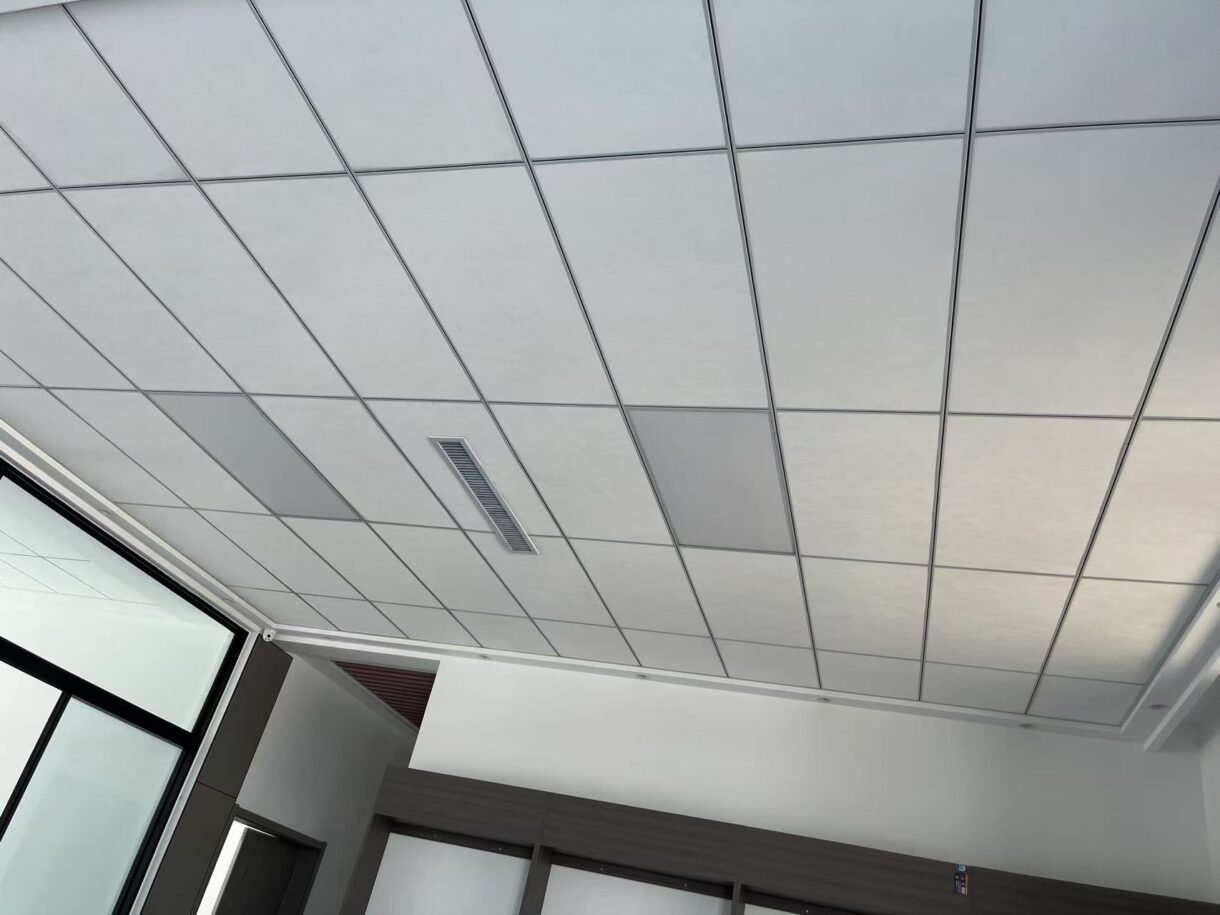





Clients doing commercial fit-outs or building home theaters often ask me: “The echo in this room is giving me a headache—what should I put on the ceiling or walls?”
Honestly, the acoustic materials market is flooded with options. But if you want a solution that actually reduces noise, resists moisture, and looks premium without costing a fortune, الألواح الصوتية المصنوعة من الألياف الزجاجية are almost always my go-to recommendation.
Let’s skip the confusing acoustic physics today and talk about why this material actually works in the real world.
Why are they such “sound-eating” monsters?
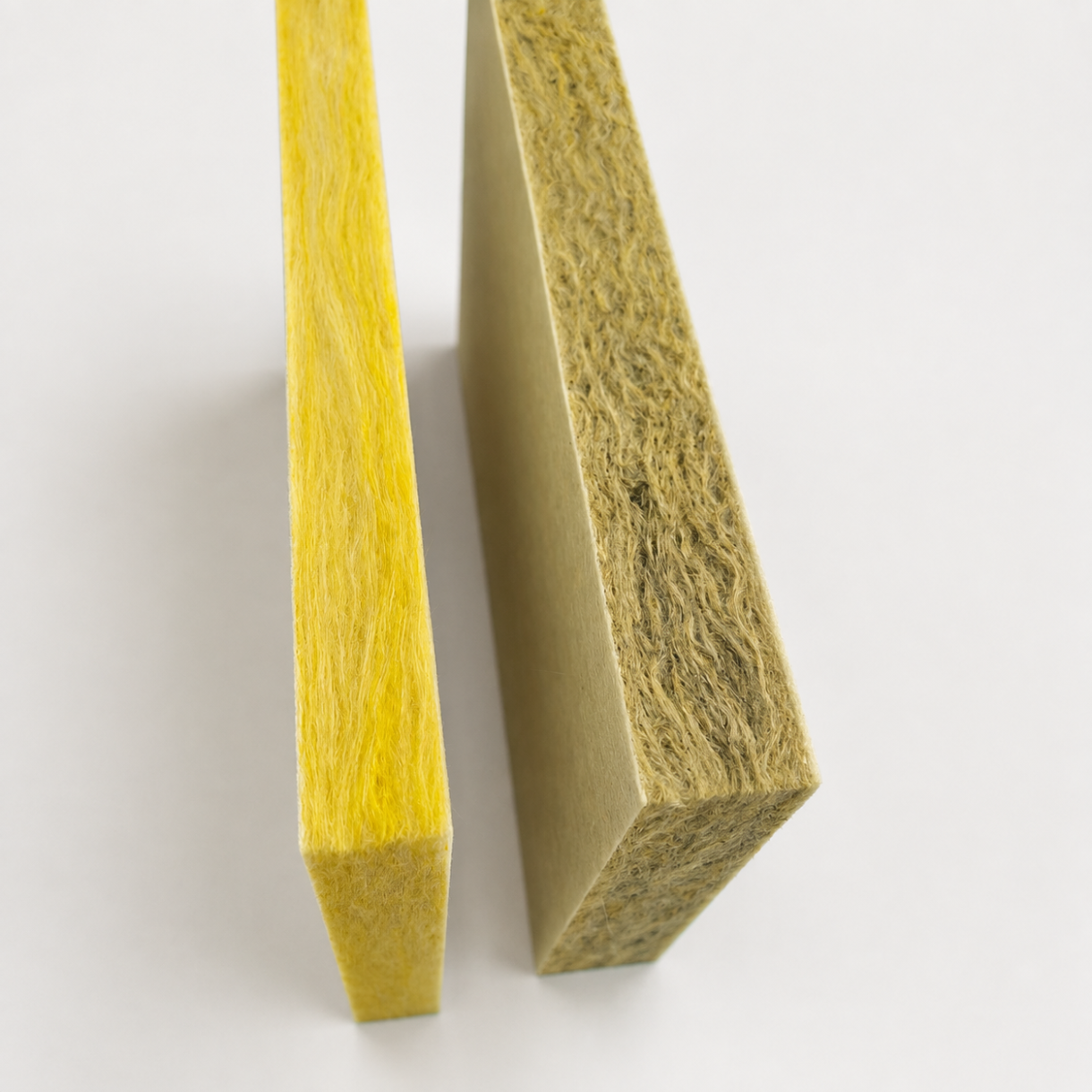
Simply put, the core is made of high-density glass fiber, covered with an acoustically transparent facing. This porous structure is a natural enemy of soundwaves. When sound hits the panel, the waves penetrate the micro-cavities inside the material, converting sound energy into heat. This is the exact same principle used in professional recording studios and large conference centers.
The Classic Showdown: Fiberglass vs. Mineral Wool
Whenever ceiling noise reduction comes up, people immediately think of mineral wool ceiling tiles. The most common question we get is: Which one should I choose?
Here is the direct conclusion: If your budget is incredibly tight and you just need the cheapest drop ceiling available, mineral wool will do the job. But if you care about the space environment and longevity, fiberglass panels win by a landslide.
| Feature | الألواح الصوتية المصنوعة من الألياف الزجاجية | Mineral Wool Tiles |
| NRC (Sound Absorption) | 0.90 – 1.0 (Excellent) | ~0.50 (Average) |
| Moisture Resistance | Non-hydrophilic, no sagging | Absorbs moisture, prone to sagging |
| Dust & Shedding | Sealed edges, no dust | Sheds dust when cut, itchy |
| Durability | Long-lasting, maintains shape | Prone to yellowing and mold in humidity |
- The NRC (Noise Reduction Coefficient) Gap: As seen above, fiberglass panels absorb almost all the sound that hits them. Mineral wool usually hovers around 0.5. In a noisy environment, you can literally hear the difference.
- Moisture Resistance & Sagging (The Fatal Flaw): This is the biggest weakness of mineral wool. In humid climates or basements, mineral wool absorbs moisture, turns yellow, sags, and can even grow mold after a year or two. Fiberglass is naturally non-hydrophilic (it doesn’t absorb water). No matter how humid it gets, it stays perfectly flat.
- Dust and Eco-friendliness: Any installer who has worked with mineral wool knows it sheds dust everywhere when cut. Modern fiberglass panels have fully sealed edges and upgraded manufacturing processes. They don’t shed, making them much friendlier for people with respiratory sensitivities.
Where do they actually belong? (Real-World Applications)
Don’t assume they are only for industrial factories. Modern fiberglass panels feature minimalist, high-end designs.
- Open-Plan Office Soundproofing: Most modern offices lack partitions. If one person takes a sales call, half the floor hears it. Hanging fiberglass acoustic baffles (clouds) above workstations or installing a wall-to-wall acoustic ceiling dramatically reduces voice reverberation.
- Home Theaters & Streaming Rooms: The biggest enemies of a home theater are standing waves and low-frequency boominess. Using fiberglass panels as a base for fabric-wrapped acoustic walls, or installing them on the ceiling, instantly cleans up the soundstage.
- Gyms and Auditoriums: If you don’t use high-absorption materials in large, high-ceiling spaces, using a microphone results in a muddy mess of echoes. Fiberglass not only absorbs sound effectively but also meets strict Class-A fire safety ratings required for public spaces.
A Quick Note on Installation
Installing fiberglass acoustic panels isn’t rocket science. The most common method is a standard exposed grid ceiling (just drop them in), or a concealed grid for a seamless look. If you are retrofitting an old room and don’t want to build a frame, you can glue them directly to a clean, flat ceiling using construction adhesive.
Pro tip for installers: While modern eco-fiberglass isn’t as itchy as the old stuff, it’s still best practice to wear thin gloves and a mask when cutting the panels.
Final Thoughts
When buying acoustic materials, don’t just look at the surface finish, and don’t fall for “space-age” marketing jargon. Focus on the hard data: NRC ratings and moisture resistance.
If you’re currently trying to solve a noise issue, or if you’re looking for a reliable fiberglass acoustic panel manufacturer for your next project, my advice is to request a few physical samples. Compare the core density and edge finish yourself. You can’t fake good acoustics—once installed, your ears will immediately tell you if you made the right choice.
Need a quote for your project? Contact our acoustic experts today to get free fiberglass panel samples, OEM/ODM support, and a customized soundproofing solution.