





Fabric Wrapped Fiberglass Acoustic Panels for Walls and Ceilings
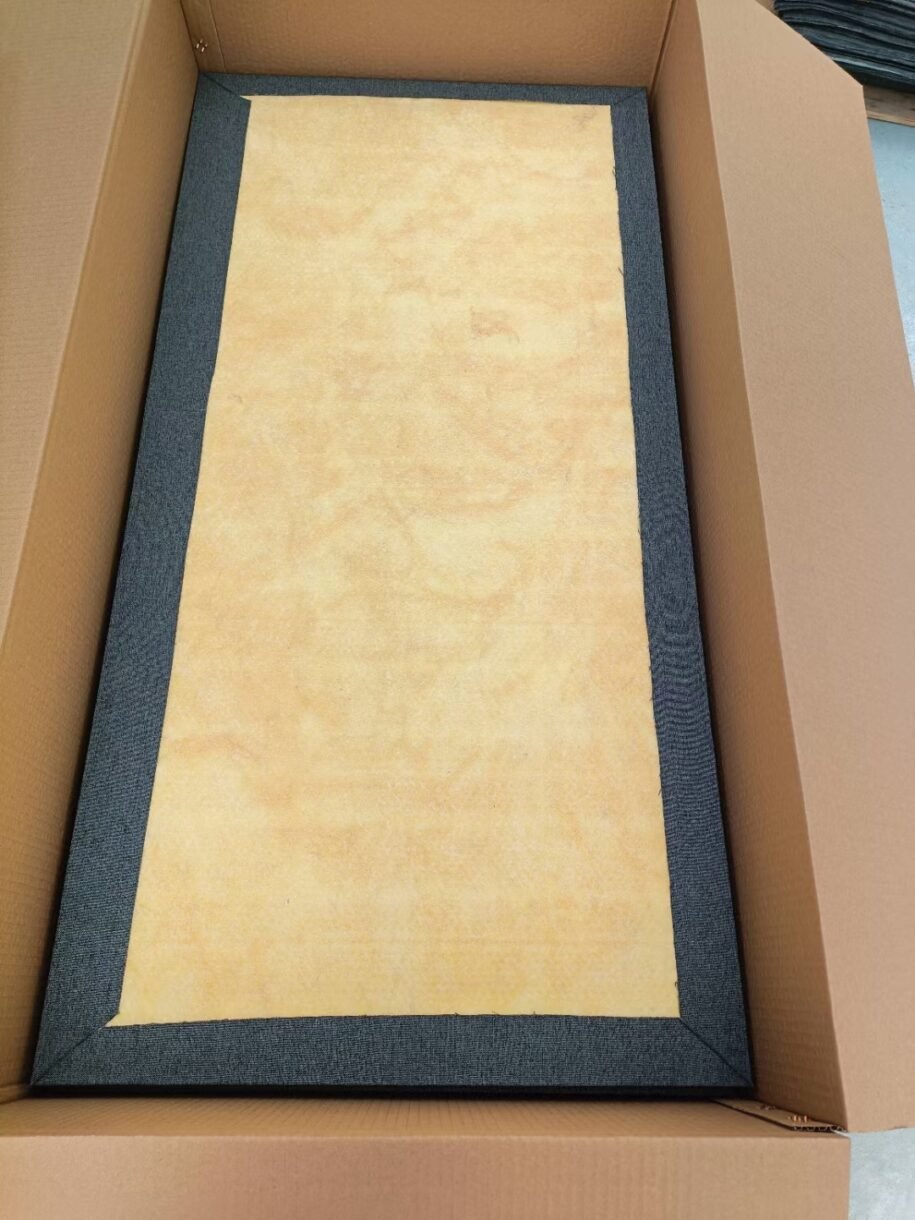
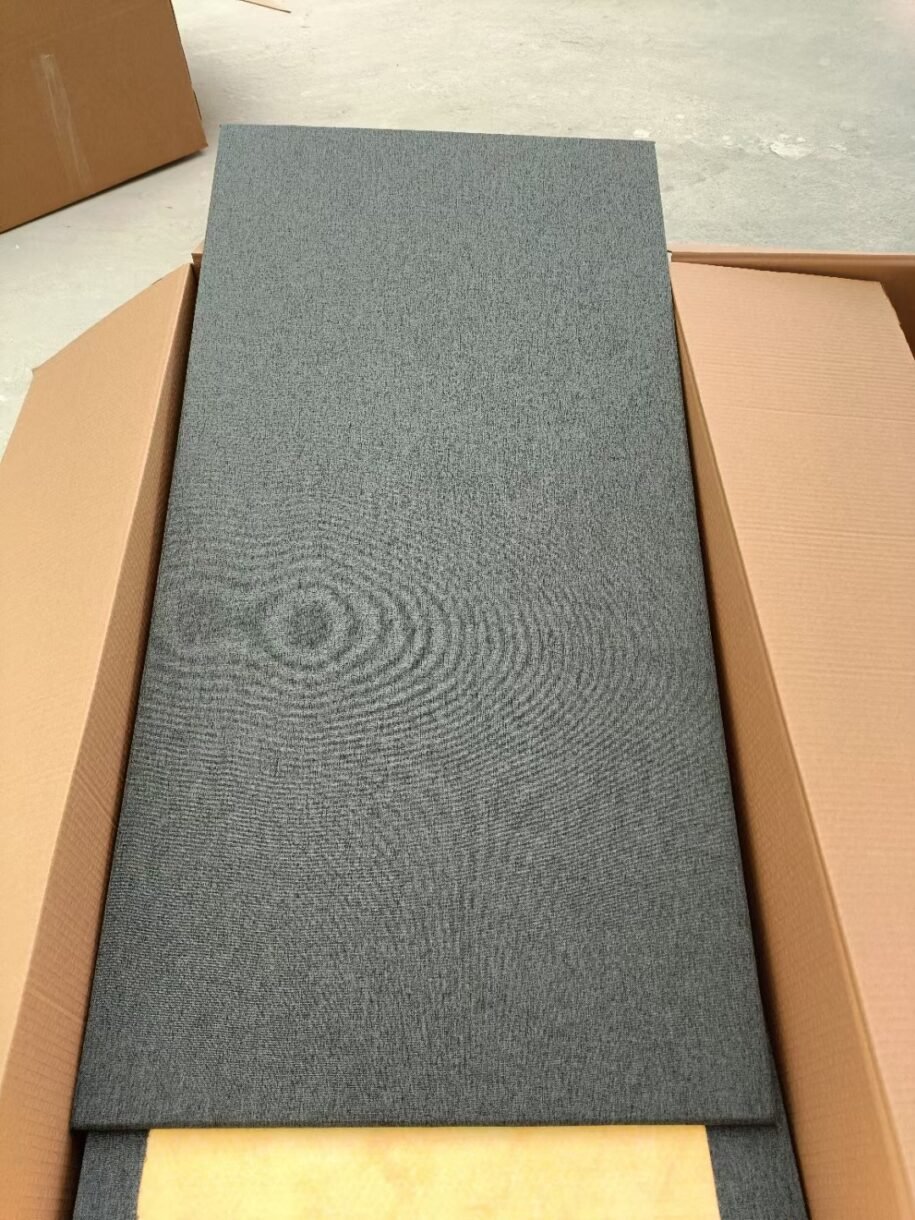
Fabric wrapped fiberglass acoustic panels are used where sound absorption and interior appearance must be considered together. A fiberglass core absorbs reflected sound, while the outer fabric provides a finished surface suitable for music rooms, offices, studios, schools and other occupied spaces.
The panels can be installed directly on a wall, suspended below a ceiling or made as individual sound absorbers. Sizes, shapes, fabric colors, edge details and mounting systems can be adjusted according to the drawings and acoustic requirements of each project.
What Is a Fabric Wrapped Fiberglass Acoustic Panel?
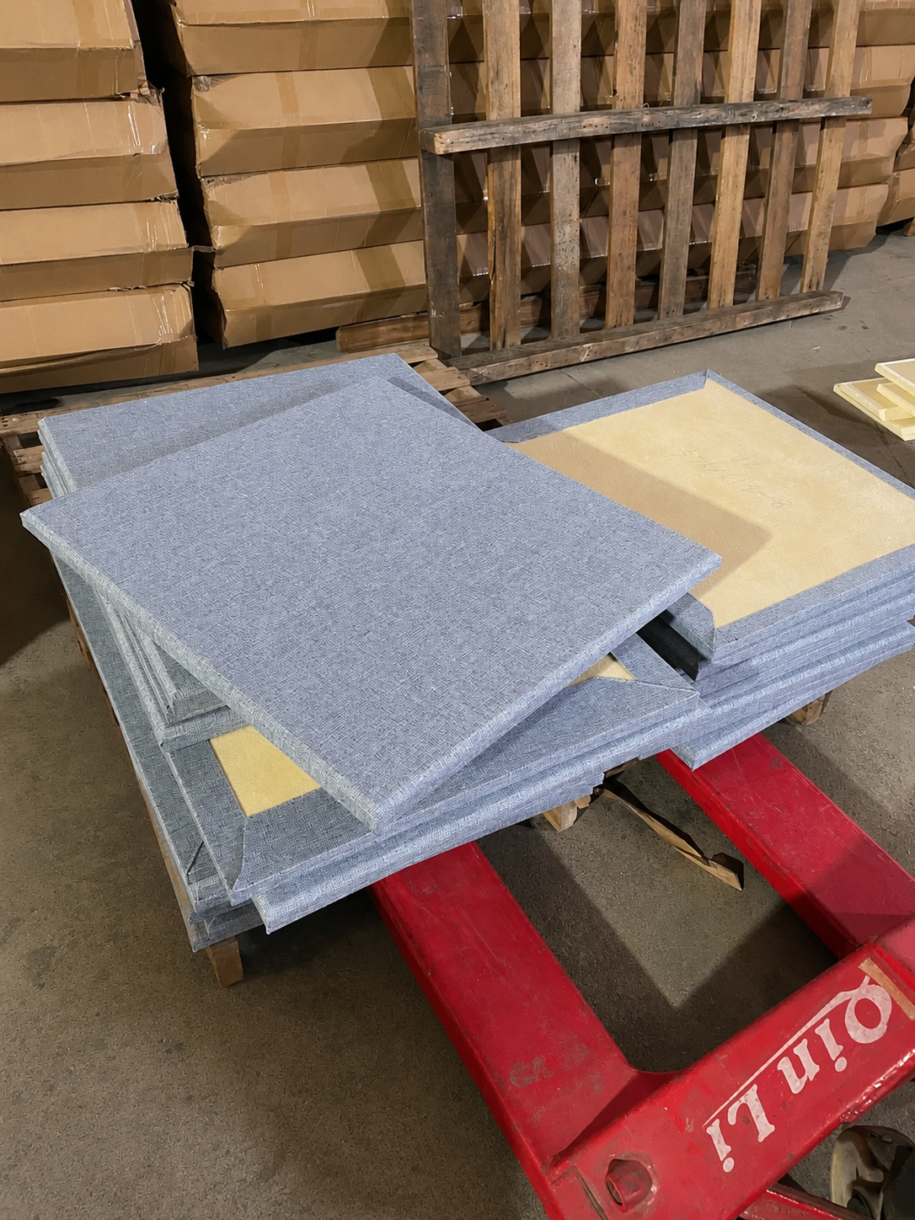
The panel consists of a sound-absorbing fiberglass core covered with acoustically transparent decorative fabric. The fabric is wrapped around the face and edges, keeping the fiberglass core enclosed and giving the panel a clean, touch-friendly surface.
Unlike exposed insulation materials, fabric covered fiberglass acoustic wall panels can remain visible as part of the interior design. They are commonly arranged as rectangular wall panels, ceiling clouds, suspended baffles or custom-shaped acoustic elements.
The fabric should allow sound to pass through instead of reflecting it. Its color, texture and fire performance must therefore be checked together with the fiberglass core rather than selected only by appearance.
Typical Product Specifications
The following specifications are common production options. Final parameters should be confirmed according to the required size, installation method and test standard.
| Item | Typical Options |
|---|---|
| Core material | High-density fiberglass acoustic board |
| Standard thickness | 20mm, 25 mm, 40 mm , 50 mm, Customizable thickness |
| Common sizes | 600 × 600 mm, 600 × 1200 mm, 300 × 1200 mm, Customizable thickness |
| Customization | Custom sizes and shapes available |
| Surface finish | Acoustically transparent fabric |
| Edge options | Square, bevelled or fabric-wrapped edge |
| Installation | Adhesive, hooks, impaling clips, Z-clips or suspension cables |
| Application | Interior walls, ceilings and suspended acoustic absorbers |
| Acoustic performance | NRC up to 0.90–0.95, depending on thickness, mounting and test conditions |
| Color | Standard fabric colors or project-based color matching |
| Fire performance | Fiberglass core and finished panel reports supplied according to the selected material system |
NRC values and fire classifications should be supported by the applicable test report. Changing the fabric, adhesive, core thickness or rear air gap may affect the performance of the completed panel.
Where These Panels Are Used
Music Rooms and Recording Spaces
Music rooms contain reflections from walls, ceilings, floors and equipment. When these reflections remain uncontrolled, instruments and vocals can sound unclear even if the room is not particularly large.
Fabric wrapped acoustic panels for music rooms are normally installed at the first reflection points, on the rear wall and, where required, above the listening or performance area. The purpose is not to remove all reverberation. It is to control excessive reflections while retaining a natural response in the room.
Recording studios, rehearsal rooms, podcast rooms and home theatres can use the same basic panel construction, but the coverage area and placement should be determined by room volume and use.
Offices and Meeting Rooms
Glass partitions, hard floors and painted ceilings often create noticeable reverberation in meeting rooms and open offices. Wall-mounted sound absorbing panels can reduce reflected speech and improve communication without changing the existing ceiling system.
For an office project, fabric colors can be matched to furniture, partitions or brand colors. Panels may also be cut into several sizes to form an organized wall layout instead of covering the entire surface.
Schools and Training Rooms
Classrooms and training rooms depend on speech clarity. Fabric fiberglass acoustic panels can be placed on side walls, rear walls or ceilings to reduce repeated sound reflections.
For areas that students can reach, the panel edges should be fully wrapped, firmly fixed and positioned away from locations where frequent impact is expected.
Auditoriums, Churches and Multipurpose Halls
Large rooms usually require treatment on more than one surface. Wall panels can control lateral reflections, while suspended fiberglass ceiling absorbers add absorption where the walls alone are insufficient.
Before production, the project team should provide ceiling height, wall construction, room dimensions, seating arrangement and available installation points. This information helps determine whether direct-mounted panels, hanging clouds or acoustic baffles are more suitable.
Restaurants, Hotels and Reception Areas
In hospitality interiors, acoustic treatment must fit the design rather than look like additional technical equipment. Fabric finishes allow the panels to coordinate with wood, stone, metal and painted surfaces.
Removable mounting systems are useful where the panels may need to be cleaned, replaced or moved during later interior renovation.
Wall Installation with Double-Sided Tape and Structural Adhesive
For flat, stable interior walls, a common installation method uses double-sided tape together with spot-applied structural adhesive.
The double-sided tape holds the panel in position during installation. The structural adhesive provides the main long-term bond after curing.
- Check that the wall is dry, flat and free from loose paint, dust and oil.
- Mark the installation lines and confirm the panel arrangement before applying adhesive.
- Apply several strips of double-sided tape to the back of the panel.
- Apply structural adhesive in separate dots or short beads, leaving space between the adhesive areas.
- Remove the tape liner and align the panel with the marked position.
- Press the panel evenly without crushing the fiberglass core or deforming the edges.
- Support the panel if required until the structural adhesive has cured.
The adhesive must be compatible with the wall finish, panel backing and local fire requirements. Direct bonding should not be used on damp walls, weak coatings, dusty plaster or surfaces that may peel away.
A small installation test is recommended before fixing the full order.
Hook, Clip and Mechanical Installation
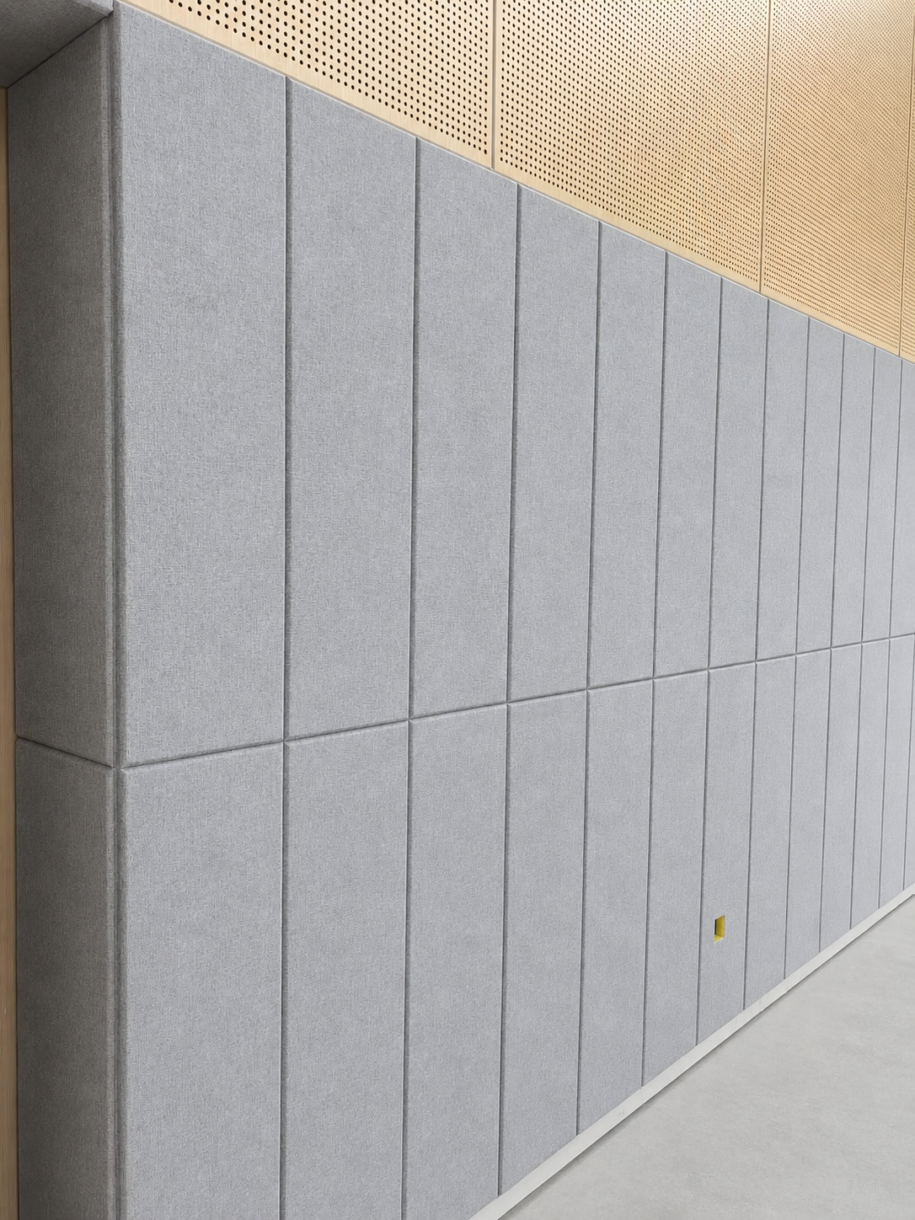
Hooks, impaling clips and Z-clips are useful when panels need stronger mechanical support or future removal.
Impaling clips are normally fixed to the wall first. The panel is then pressed onto the projecting points, usually with a compatible adhesive added for extra security. Z-clips create a removable installation and are suitable for larger panels or projects requiring access behind the acoustic treatment.
Mechanical fixing should be considered when:
- The panel is large or relatively heavy.
- The wall surface is unsuitable for adhesive.
- Panels may need to be removed or replaced.
- The installation is overhead.
- Local safety requirements call for secondary restraint.
For ceiling installation, do not rely only on ordinary double-sided tape. Suspended panels and ceiling clouds should use a suitable metal frame, cable, hook or other mechanical fixing system designed for the panel weight and site conditions.
Suspended and Independent Sound Absorbers
Fabric wrapped fiberglass panels can also be manufactured as independent sound absorbers rather than being attached directly to the wall.
Common formats include:
- Suspended acoustic ceiling clouds
- Vertical acoustic baffles
- Double-sided hanging panels
- Freestanding acoustic screens
- Custom geometric absorbers
Suspending a panel creates an air space behind it and exposes more absorbing surface. This can improve performance compared with fixing the same panel directly to a hard surface, although the final result depends on panel thickness, suspension height and spacing.
Independent absorbers are useful in rooms where the existing walls cannot be covered, or where acoustic treatment needs to remain visually separate from the building finish.
Custom Sizes, Fabrics and Shapes
Commercial projects rarely use only one standard panel. We support OEM and ODM production based on panel schedules, elevation drawings, RAL or Pantone references and installation requirements.
Available customization can include:
- Panel thickness and overall dimensions
- Rectangular, square, hexagonal and irregular shapes
- Fabric color and texture
- Printed or combined-color surfaces
- Bevelled or square edges
- Wall, ceiling or suspended installation
- Hook, clip, frame and adhesive-compatible backing
- Project labels and export packaging
For repeat orders, fabric batch information should be recorded because slight color differences can occur between dye lots. If several panels will be installed together on one wall, producing them from the same fabric batch is recommended.
Information Required for a Quotation
To prepare an accurate quotation, please provide:
- Required panel dimensions and thickness
- Total quantity or installation area
- Fabric color or reference image
- Wall-mounted, ceiling-mounted or suspended application
- Required NRC or fire test standard
- Project country and delivery destination
- Drawings for custom shapes or panel layouts
- Packaging and labeling requirements
If the project is still at the design stage, room dimensions, photographs and intended use can help us recommend a practical panel size and installation method.
Frequently Asked Questions
Can fabric wrapped fiberglass acoustic panels be touched?
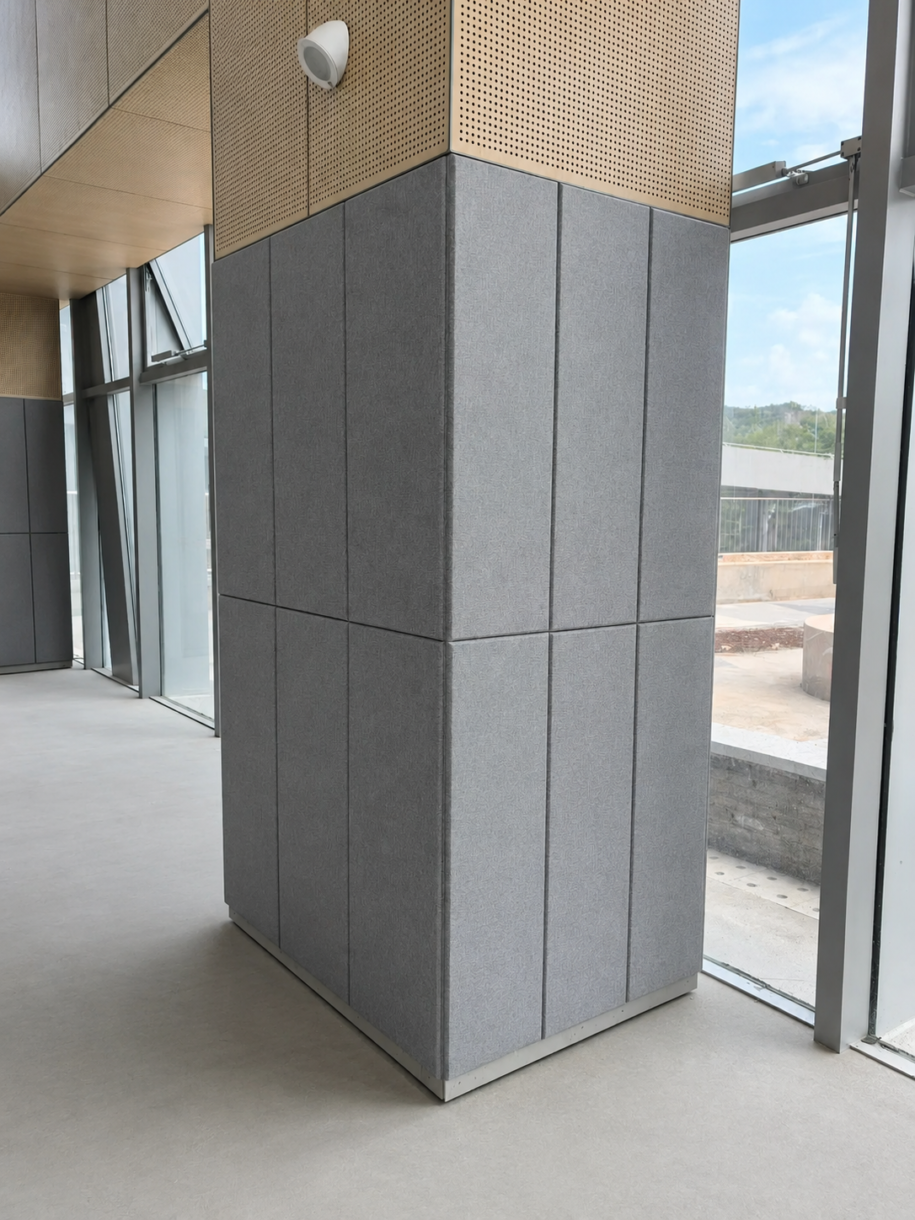
Yes. The fiberglass core is enclosed by the outer fabric, producing a finished surface suitable for normal contact in interior spaces. For accessible areas, specify fully wrapped edges and a durable fabric. Panels should still be protected from repeated impact, cutting and moisture.
Are these panels used for soundproofing?
They mainly absorb reflected sound inside a room and reduce echo or reverberation. They are not a complete substitute for sound-isolation walls, sealed doors or other constructions used to block sound transmission between rooms.
Can the panels be installed on both walls and ceilings?
Yes. Wall panels can use adhesive, hooks or clips. Ceiling panels should use a suitable mechanical mounting or suspension system, especially when installed overhead.
Can double-sided tape be used without structural adhesive?
Double-sided tape is normally used for temporary positioning during installation. Structural adhesive or mechanical fasteners provide the long-term fixing. The correct method depends on panel weight, wall condition and safety requirements.
What is the difference between fiberglass and PET acoustic panels?
Fiberglass panels can provide high sound absorption with a relatively compact thickness. PET panels are more impact-resistant and may be preferred in areas with frequent direct contact. Material selection should consider acoustic performance, fire requirements, surface durability and installation location.
Can you manufacture custom fabric acoustic panels for project orders?
Yes. Custom sizes, shapes, fabrics, colors, edge treatments and mounting accessories can be produced for distributors, contractors, builders and project buyers. Samples can be prepared before bulk production when color or fabric texture must be approved.
Request Samples or a Project Quotation
Send us your panel schedule, drawings, required fabric color and destination. We can review the dimensions, mounting method, packaging and applicable test documents before production.
Custom fiberglass acoustic panels, sound insulation wall panels, and architectural aluminum ceiling systems are available for commercial projects worldwide. OEM and ODM support is provided for custom sizes, colors, finishes and specifications.