





Quick Answer
Fiberglass acoustic panels for commercial interiors should be selected according to NRC performance, panel thickness, fire requirements, humidity resistance, surface finish and installation method. For most noise-control projects, panels with an NRC of 0.90 or higher provide strong sound absorption. However, buyers should always confirm that the acoustic and fire test reports match the exact thickness, facing and installation configuration being supplied.
Fiberglass acoustic panels are widely used to control noise and improve sound quality in commercial interiors.
Controlling noise is an important part of designing offices, schools, hotels, theaters, conference rooms and other commercial interiors. Excessive reverberation can reduce speech clarity, disturb occupants and affect the overall comfort of a space.
Because they combine strong sound absorption, lightweight construction and flexible design options, fiberglass acoustic panels are widely used for commercial ceilings and walls.
However, acoustic panels are available in different thicknesses, densities, surfaces, colors and installation systems. Choosing the correct specification requires more than selecting a panel based only on appearance.
This guide explains the main factors that architects, contractors, distributors and project buyers should consider when choosing fiberglass acoustic panels.
Why Are Fiberglass Acoustic Panels Used?
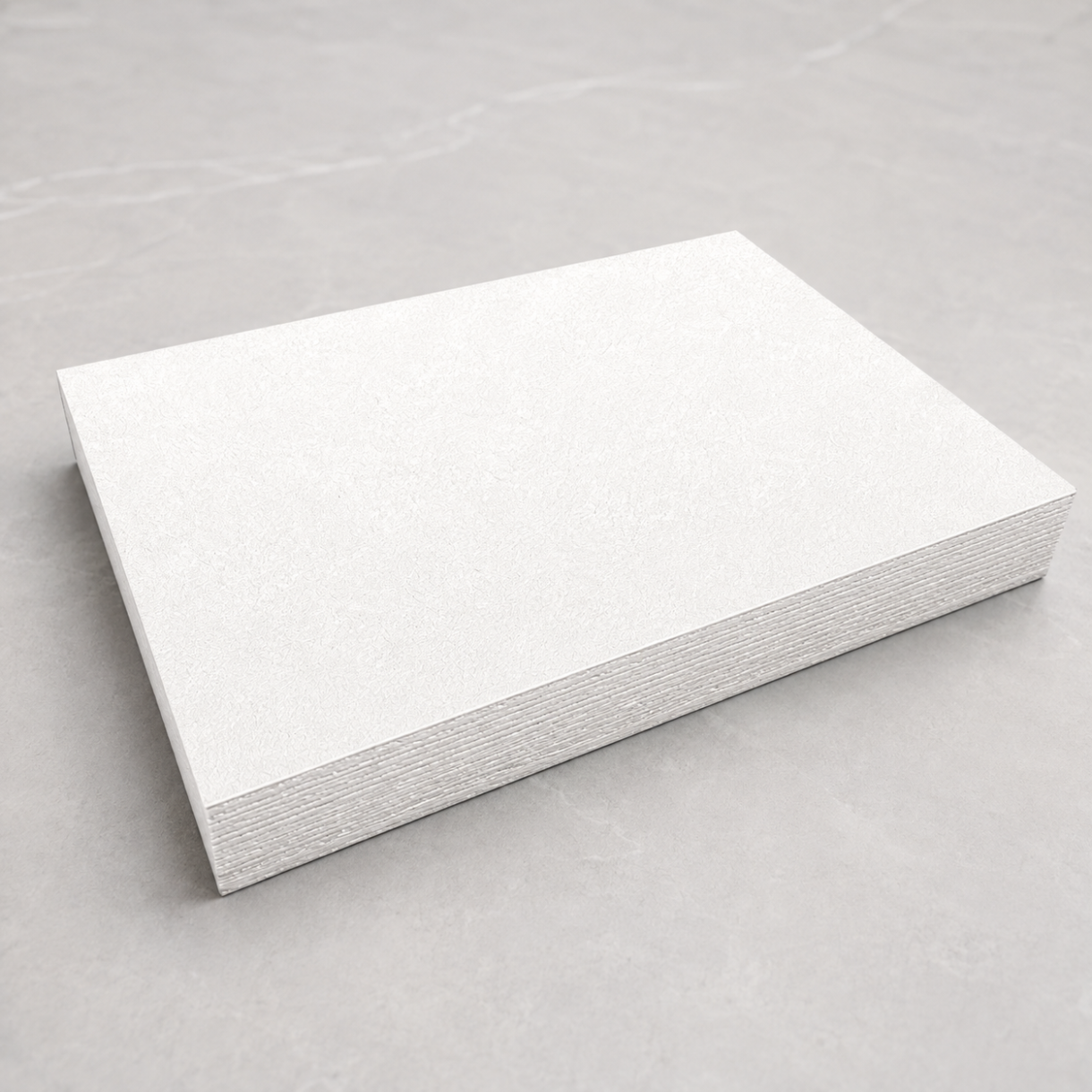
Fiberglass acoustic panels are manufactured from high-density glass wool and finished with decorative or protective surfaces. Their porous internal structure helps absorb sound energy and reduce reflections inside a room.
Compared with many traditional decorative materials, fiberglass panels offer several advantages:
- High sound absorption
- Lightweight construction
- Easy cutting and installation
- Multiple colors and surface finishes
- Wall and ceiling applications
- Custom sizes, thicknesses and shapes
- Fire-rated and moisture-resistant options
- Suitable for large commercial projects
These characteristics make them suitable for projects that require both acoustic performance and a clean architectural appearance.
Fiberglass Acoustic Panel Selection Guide
| Project requirement | Recommended consideration |
|---|---|
| Offices and meeting rooms | Focus on speech clarity, surface color and easy installation |
| Schools and classrooms | Prioritize sound absorption, durability and fire performance |
| Cinemas and theaters | Consider black facing, high NRC and low-light appearance |
| Hotels and restaurants | Balance acoustic performance with decorative finishes |
| Studios and auditoriums | Select higher NRC, suitable thickness and professional mounting |
| Humid environments | Confirm moisture resistance and anti-sag performance |
| Custom interiors | Specify panel size, color, shape, edge and installation system |
XIAO HENG Product Capabilities
XIAO HENG manufactures fiberglass acoustic panels for commercial ceilings and walls. Available options include standard white panels, black cinema ceiling panels, fabric-wrapped panels and custom fiberglass acoustic panels.
Depending on the product configuration and installation method, acoustic panel options can reach NRC values of approximately 0.90–0.95. Custom sizes, thicknesses, colors, shapes and surface finishes are available with OEM/ODM project support.
Acoustic, fire and environmental performance should be confirmed using reports that correspond to the exact product construction ordered for the project.
1. Determine the Required Acoustic Performance
The first factor to consider is the required sound absorption performance.
The most common measurement is the Noise Reduction Coefficient, or NRC. NRC indicates how effectively a material absorbs sound across several frequencies. A higher NRC value generally means better sound absorption.
Fiberglass acoustic panel options can reach NRC values of approximately 0.90–0.95 under suitable test and installation conditions. However, the actual performance depends on several factors:
- Panel thickness
- Material density
- Surface facing
- Installation method
- Air space behind the panel
- Frequency range of the noise
For offices and meeting rooms, the main objective may be improving speech clarity. Theaters, studios and cinemas may require stronger absorption across a wider frequency range.
Before ordering, ask the supplier for an acoustic test report that matches the proposed panel construction. A report for a different thickness, surface or mounting method may not represent the performance of the product supplied to your project.
You can review more options in our Sound-Absorbing Panel Series.

2. Choose the Appropriate Thickness and Density
Panel thickness has a direct influence on sound absorption, particularly at lower frequencies.
Common fiberglass acoustic panel thicknesses include:
- 15 mm
- 20 mm
- 25 mm
- 30 mm
- 40 mm
- 50 mm
Thinner panels may be suitable when installation space is limited or when the project mainly requires absorption of speech-frequency noise. Thicker panels usually provide broader sound absorption and may be more suitable for theaters, studios, auditoriums and large conference spaces.
Density also affects rigidity, durability and installation. A higher-density panel may provide better dimensional stability, while the correct density must still be selected according to the ceiling or wall system.
The ideal specification should balance acoustic performance, panel weight, available installation depth and project budget.
3. Check Fire and Safety Requirements
Fire performance is an essential consideration for commercial interior materials.
Requirements vary by country, building type and project specification. Airports, hospitals, schools, hotels and public buildings may require specific flame-spread, smoke-development or combustibility classifications.
Fire-rated fiberglass acoustic panel options are available, but buyers should confirm that the test report applies to the complete product configuration, including:
- Fiberglass core
- Surface facing
- Adhesive
- Edge coating
- Backing material
- Installation system
A certificate for the fiberglass core alone may not represent the fire performance of the finished panel.
When requesting a quotation, provide the required testing standard and classification. The supplier can then check whether an existing product meets the requirement or whether a special construction is needed.
4. Consider Humidity and Dimensional Stability
Humidity is another important factor, especially in tropical climates, coastal areas and buildings with variable air-conditioning conditions.
High humidity can affect certain ceiling materials by causing sagging, deformation or surface deterioration. For projects in Malaysia, Singapore, Southeast Asia and other humid regions, buyers should ask about:
- Relative humidity resistance
- Anti-sag performance
- Edge protection
- Moisture-resistant surface finishes
- Recommended storage conditions
- Installation environment
Panels should be stored in a dry, ventilated area and protected from water before installation. They should also be allowed to adapt to the indoor environment when required by the installation instructions.
For projects specifying RH99 anti-sag performance or another humidity classification, request the corresponding test report for the exact product.
5. Select the Surface, Color and Shape
Acoustic materials are visible architectural elements, so their appearance should match the overall interior design.
Fiberglass panels can be supplied with different surface treatments, including:
- White fiberglass tissue
- Black fiberglass tissue
- Decorative fabric
- Custom-colored surfaces
- Printed or textured finishes
- Painted edge treatments
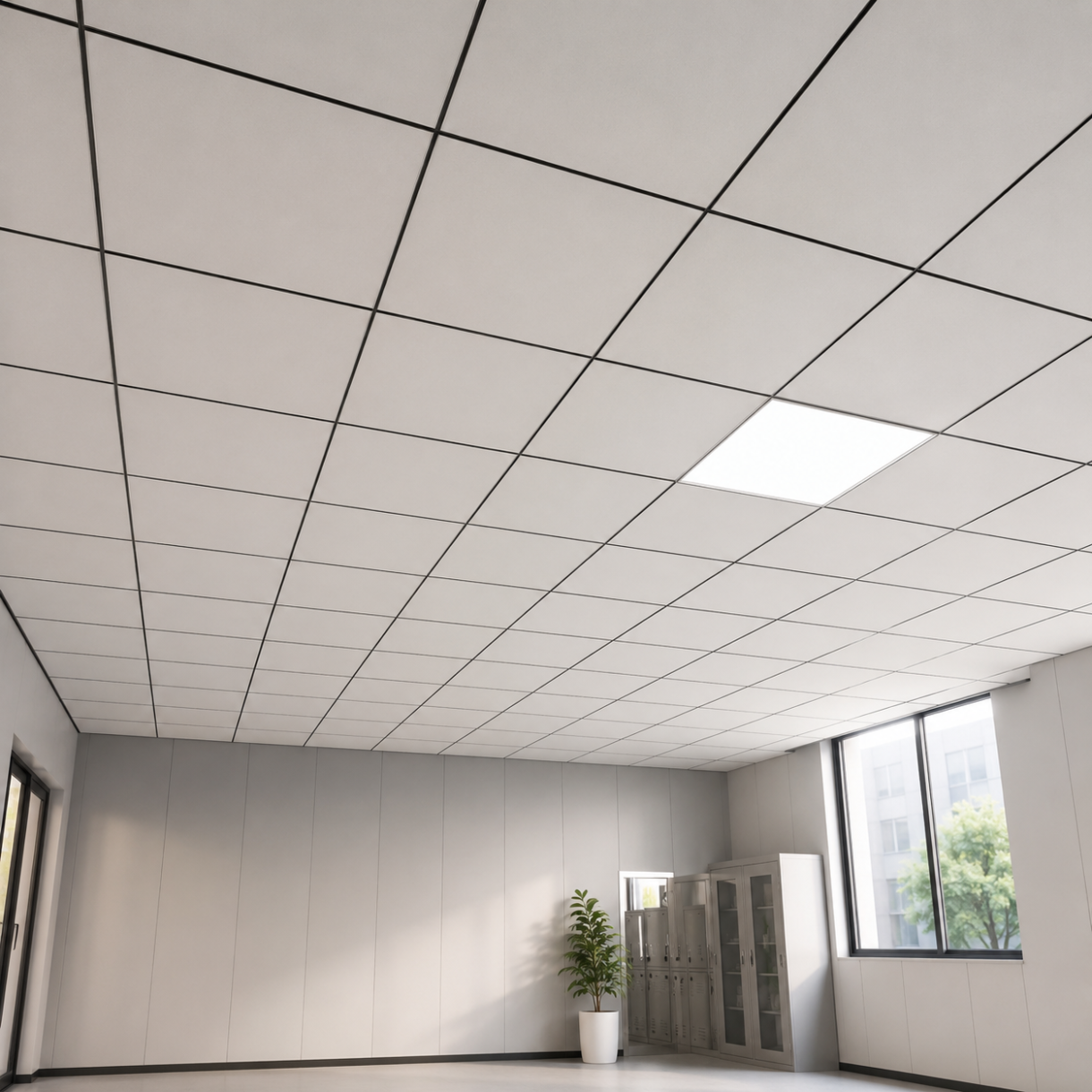
White panels are commonly used for clean commercial ceilings, while black panels are suitable for cinemas, theaters, studios and exposed ceiling designs. Fabric-wrapped panels provide more color choices for offices, restaurants, schools and hospitality projects.
Panel shape can also be customized. Besides standard square and rectangular panels, projects may require:
- Circular panels
- Hexagonal panels
- Curved elements
- Suspended acoustic clouds
- Vertical acoustic baffles
- Custom-cut decorative shapes
For projects requiring special colors, dimensions or architectural forms, review our custom fiberglass acoustic panels.
6. Match the Panel to the Installation Method
The installation method should be confirmed before the panel specification is finalized.
Common installation methods include:
- Lay-in ceiling grids
- Direct adhesion to walls or ceilings
- Mechanical clips
- Concealed suspension systems
- Aluminum profiles
- Suspended cloud systems
- Hanging baffle systems
Lay-in panels must match the dimensions and structure of the ceiling grid. Direct-mounted wall panels require suitable adhesive or mechanical fixing. Suspended panels need secure hanging accessories and sufficient structural support.
The installation method can also affect acoustic performance. For example, an air gap behind an acoustic panel may improve absorption at certain frequencies.
Buyers should provide ceiling plans, wall elevations or installation drawings whenever possible. This helps the manufacturer confirm panel dimensions, edge details, accessories and packing requirements.
7. Evaluate Customization and Supplier Capability
Commercial projects often require more than standard panels. A suitable manufacturer should be able to support project-specific requirements from product selection through production and shipment.
Important supplier capabilities include:
- OEM and ODM manufacturing
- Custom sizes and thicknesses
- Custom colors and finishes
- Edge and shape processing
- Sample production
- Technical data sheets
- Available test reports
- Export packaging
- Container loading support
- Installation recommendations
For distributors and wholesalers, private labeling and customized packaging may also be required. For contractors, accurate quantities, production schedules and delivery coordination are particularly important.
XIAO HENG provides fiberglass acoustic panels and architectural ceiling materials for international commercial projects. You can view all products to compare available acoustic and ceiling solutions.

Common Applications
Fiberglass acoustic panels can be used in many commercial and public spaces, including:
- Corporate offices
- Meeting and conference rooms
- Schools and classrooms
- Hotels and restaurants
- Cinemas and theaters
- Recording and broadcasting studios
- Hospitals and healthcare facilities
- Shopping centers
- Airports and transport terminals
- Auditoriums and multipurpose halls
Each application may require a different combination of acoustic performance, fire rating, humidity resistance, color and installation system.
Information Needed for an Accurate Quotation
Providing complete project information helps the supplier recommend a suitable product and prepare an accurate quotation.
Before requesting a price, prepare the following details:
- Project name and destination country
- Application area
- Panel dimensions
- Required thickness
- Required quantity
- Preferred color and surface finish
- Installation method
- Acoustic performance requirement
- Fire or environmental testing requirements
- Drawings or reference images
- Required delivery schedule
If the final specification has not yet been confirmed, provide the available drawings and performance requirements. The manufacturer can recommend suitable options for comparison.
Conclusion
Choosing fiberglass acoustic panels requires careful consideration of acoustic performance, thickness, fire safety, humidity resistance, appearance and installation.
The lowest-priced panel is not always the most economical solution. Selecting the correct specification can improve indoor comfort, simplify installation, reduce replacement risks and help the project meet its technical requirements.
XIAO HENG supplies fiberglass acoustic panels with customizable sizes, colors, thicknesses, finishes and shapes for commercial projects worldwide. OEM and ODM support is available for importers, distributors, contractors and project buyers.
For product recommendations or a project quotation, please Contact Us and send your dimensions, quantity, drawings, application and destination country.
Frequently Asked Questions
What NRC is recommended for commercial interiors?
An NRC of 0.80 or higher is generally suitable for many commercial noise-control applications. Projects requiring stronger sound absorption may select fiberglass acoustic panels with an NRC of approximately 0.90–0.95, depending on the panel and installation configuration.
What thickness of fiberglass acoustic panel should I choose?
The appropriate thickness depends on the noise frequency, installation space and acoustic target. Thinner panels can help control speech-frequency reflections, while thicker panels generally provide broader sound absorption.
Are fiberglass acoustic panels fire resistant?
Fire-rated product options are available. Buyers should verify the required local standard and request a test report that matches the complete panel construction, including its core, surface facing, adhesive and edge treatment.
Can fiberglass acoustic panels be customized?
Yes. Panel size, thickness, color, shape, surface finish and edge treatment can be customized according to drawings and project requirements. Visit our Sound-Absorbing Panel Series for available options.
What information is required for a quotation?
Provide the application, dimensions, thickness, quantity, color, installation method, performance requirements, destination country and project drawings. For technical confirmation and pricing, please Contact Us.