





Fiberglass acoustic panels (glass wool absorbers) remain a dominant sound-absorption solution across commercial interiors, auditoriums, broadcast studios, and open-plan offices. However, acoustical consultants and general contractors frequently encounter specification failures on the job site: ceiling clouds that sag after three months, frayed edges shedding airborne fibers, or face fabrics that inadvertently reflect rather than absorb sound.
Relying exclusively on a high Noise Reduction Coefficient (NRC) rating on an idealized product sheet is not enough. This guide examines how fiberglass acoustic panels function, what technical parameters drive field durability, how fiberglass compares to PET felt and mineral wool, and practical criteria for selecting commercial-grade panels directly from trusted manufacturers like TZXH Material.
How Do Fiberglass Acoustic Panels Work?
Fiberglass acoustic panels operate as open-cell porous acoustic absorbers. At a microscopic level, they consist of non-directional, intertwined inorganic glass microfibers bonded with thermosetting resins.
When sound waves strike the surface:
- Air molecules enter the porous voids and oscillate rapidly.
- Viscous friction between the vibrating air molecules and the microfibers converts acoustic energy directly into low-grade thermal energy.
- Mid-to-high frequency reflections (human speech, flutter echoes, HVAC hiss) are damped efficiently.
For low-frequency rumble (under 250 Hz in screening rooms or fitness facilities), panels mounted directly against drywall have limited impact. Maximizing low-end bass absorption requires introducing a 50mm to 100mm (2″ to 4″) rear air cavity behind the panel or integrating tuned membrane bass traps.
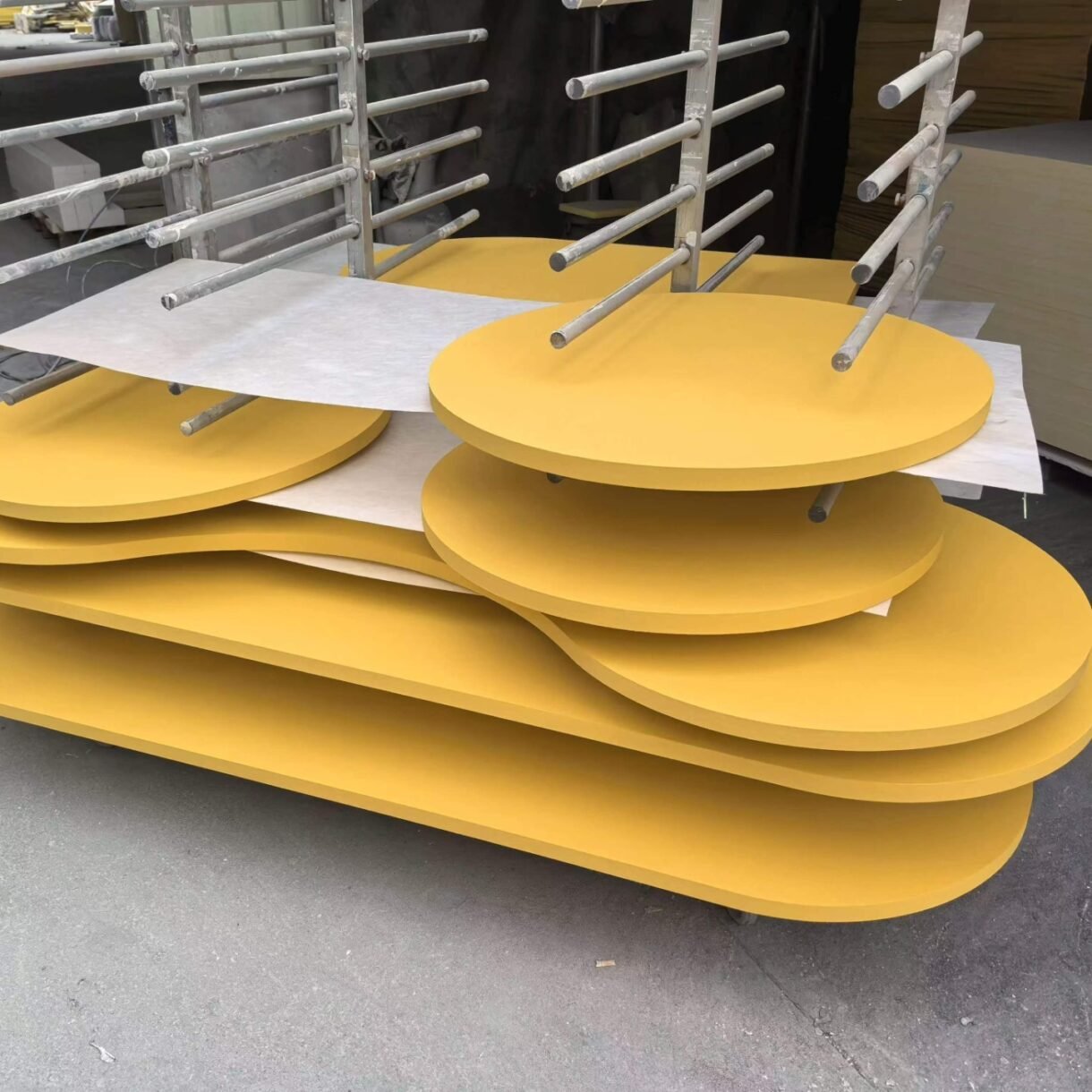
Technical Specification Checklist: 3 Factors Beyond the NRC
To ensure long-term performance and maintain building code compliance, evaluate panels across three critical engineering factors:
[ Sound Wave ] ---> [ Breathable Fabric Face ]
                             |
                             v
           [ High-Density Fiberglass Core (48–96 kg/m³) ]
           * Viscous friction dissipates acoustic energy
                             |
                             v
                 [ Resin-Hardened Impact Rim ]
1. Core Density and Structural Rigidity
Core density dictates flexural strength and dimensional stability:
- Lightweight cores (<48 kg/m³ / 3 lb/ft³): Acceptable for thermal cavity infill, but structurally weak for large suspended baffles or floating ceiling clouds. They tend to bow and sag over time due to ambient humidity changes.
- Commercial architectural grade (64 kg/m³ to 96 kg/m³ / 4 to 6 lb/ft³): Provides sharp 90-degree edges, resists surface indentation, and stays dead-flat across large suspended ceiling formats. Sourcing certified high-density panels from specialized manufacturers like TZXH Material guarantees long-span structural integrity.
2. Edge Treatment and Fiber Containment
Untreated fiberglass core edges pose handling hazards and particulate contamination risks:
- Resin-Hardened Edges: The perimeter is chemically cured using a hardening resin compound, yielding a rigid, damage-resistant border that locks cut fibers in place.
- Fully Fabric-Wrapped Edges: The acoustic textile wraps smoothly around the face, sides, and returns onto the backboard, creating a clean finish while preventing particulate release into HVAC airflow channels.
3. Acoustic Face Air-Flow Resistivity
- Acoustically Transparent Textiles: To allow sound waves to reach the dissipative core, front finishes must maintain high air-flow permeability (such as open-weave polyester, recycled blends, or specialized fiberglass veils).
- Avoid Non-Porous Surface Barriers: Heavy airtight laminates, impermeable vinyl coatings, or standard decorative films reflect high-frequency sound waves immediately, turning an intended acoustic absorber into a sound reflector.
Material Comparison: Fiberglass vs. Polyester (PET) vs. Rockwool
| Performance Parameter | Fiberglass Panels (Glass Wool) | Polyester Felt (PET) | Rockwool (Mineral Wool) |
| Fire Safety Rating | Class A (ASTM E84) / EN 13501-1 A2-s1,d0 | Typically Class B / B1 (requires flame retardants) | Class A / Non-combustible |
| NRC (1″ to 2″ Thickness) | 0.85 – 1.05 (Broadband high absorption) | 0.45 – 0.75 (Lower bass/mid absorption) | 0.85 – 1.00 (Excellent broadband) |
| Dimensional Stability | High rigidity; resists sagging | Lightweight, but can expand/warp in heat | Low structural rigidity; easily deforms |
| Primary Use Cases | Wall panels, baffles, suspended ceiling clouds | CNC-cut decorative screens, desk dividers | Wall cavity insulation, industrial soundproofing |
| Edge & Finish Detailing | Clean, crisp, fabric-wrapped edges | Smooth exposed felt edges (no wrapping needed) | Requires perimeter framing or casing |
Common Job-Site Installation Traps to Avoid
- Unconditioned or High-Moisture Environments:While inorganic glass fibers are mold-resistant, high relative humidity condenses inside the microscopic pores, temporarily degrading acoustic absorption. In unconditioned basements, commercial kitchens, or indoor natatoriums, specify vapor-permeable, antimicrobial-treated facings.
- Direct-Mount vs. Suspended Baffles in Tall Spaces:In open-plenum ceilings, hanging vertical acoustic baffles delivers nearly twice the acoustic absorption (sabins) per square foot compared to gluing tiles flat to drywall, because sound energy interacts with both the front and back of the panel.
- Field Cutting Protocols:Whenever modifications are required on-site, installers should utilize HEPA dust extraction, wear particulate respirators and protective gloves, and seal exposed edges with an approved water-based sealant to prevent fiber shedding.

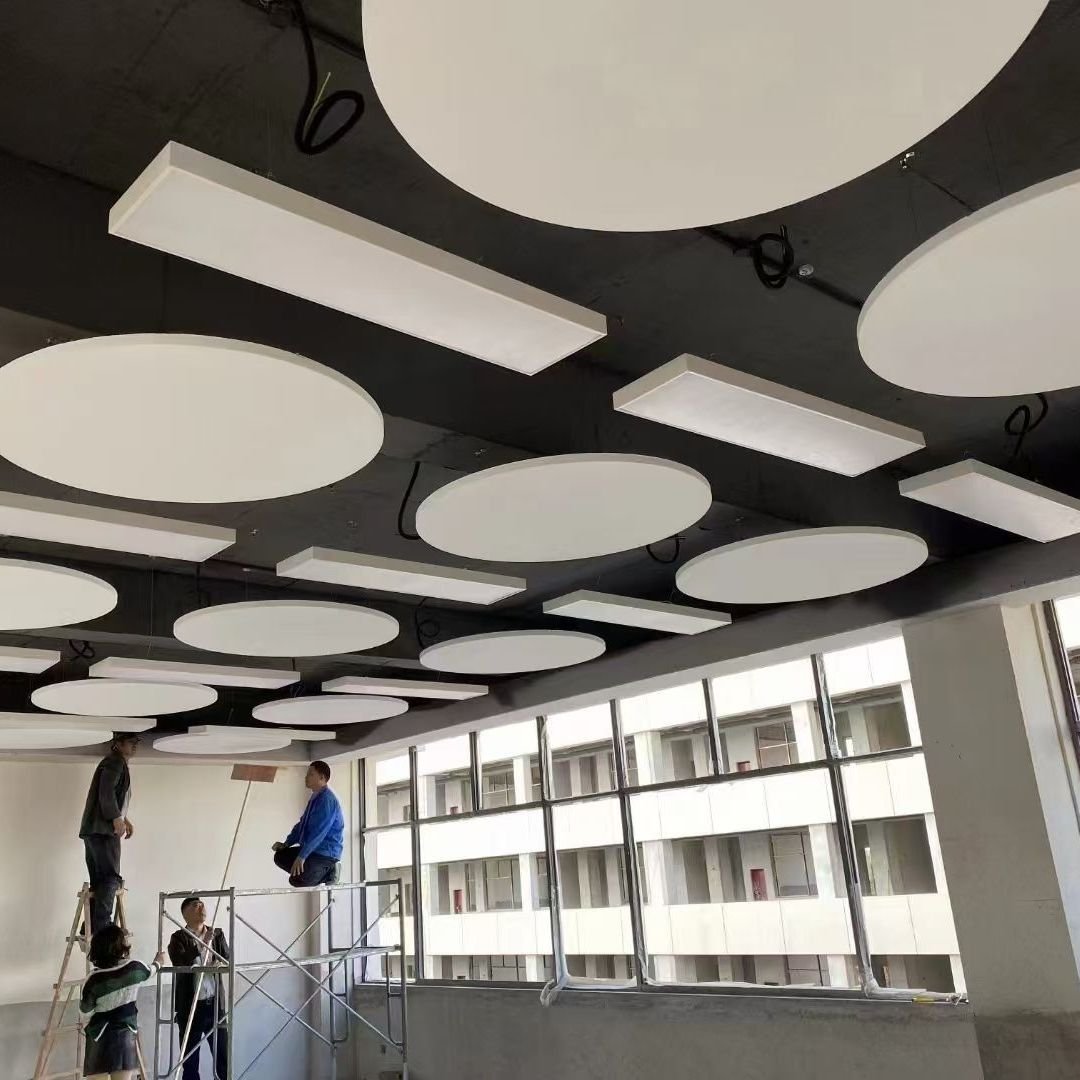
Frequently Asked Questions (FAQ)
What is the typical lead time and MOQ for custom fiberglass acoustic panels?
Custom dimensions, edge profiles (square, beveled, mitered), and specialized fabric colors can be engineered to order. For commercial project procurement, sample requests, or container-load OEM/ODM manufacturing, contact the technical team at TZXH Material for detailed lead times and minimum order quantities.
How do fiberglass acoustic panels achieve a Class A fire rating?
Glass wool is fundamentally derived from inorganic sand and recycled glass cullet, making the core inherently non-combustible. When laminated with fire-retardant facing fabrics and low-smoke binders, the finished panel meets ASTM E84 Class A or European EN 13501-1 standards, ensuring compliance with strict commercial building egress codes.
Can fiberglass panels be cleaned or maintained in high-traffic interiors?
Yes. Fabric-wrapped panels can be lightly vacuumed using a soft brush attachment. For commercial hospitality or educational environments, stain-resistant, antimicrobial, or wipeable acoustic fabrics can be specified during fabrication.
Conclusion: Specifying Quality Acoustic Solutions
Successful architectural acoustics requires balancing laboratory NRC ratings with physical job-site performance: verified Class A fire certifications, high-density core formulations (48–96 kg/m³), and durable resin-hardened perimeter detailing.
Whether you are specifying sound-dampening ceiling clouds for a corporate headquarters, designing an auditorium, or importing bulk acoustic materials, explore commercial-grade solutions and request product specifications directly at tzxh-material.com.