





Fabric-Wrapped Fiberglass Acoustic Panels combine a sound-absorbing fiberglass core with a decorative, sound-permeable fabric finish. They can be installed on walls and ceilings or used as independent sound absorbers in music rooms, studios, offices and public spaces.
This matters in music rooms, meeting rooms, studios and public interiors, where acoustic materials remain visible and may be installed within reach. A properly finished panel has a neat fabric surface, enclosed edges and a comfortable appearance. It can be arranged as a full acoustic wall, installed in selected reflection areas, suspended from the ceiling or used as an independent sound absorber.
The result depends on more than the panel itself. Fabric selection, thickness, installation position, coverage area and the space behind the panel all affect how it performs.
What Is a Fabric-Wrapped Fiberglass Acoustic Panel?
The panel consists of a porous fiberglass acoustic core covered with sound-permeable fabric. When sound enters the panel, friction within the fiber structure converts part of the sound energy into a small amount of heat. Less sound returns to the room, so echo and reverberation are reduced.
The fabric is not only decoration. It must allow sound to pass through to the fiberglass core. A dense, coated or impermeable textile can reflect sound and reduce the benefit of the absorber behind it.
A suitable acoustic fabric should provide:
- Good sound permeability
- Stable color under the expected lighting
- Enough strength for wrapping and edge finishing
- Resistance to sagging or loosening
- A surface that can be cleaned according to project requirements
- Compliance with the required fire-safety specification
Color, texture and weave can be selected to match walls, furniture, curtains or other interior finishes. For commercial projects, custom colors can also be matched against a supplied fabric sample, Pantone reference or approved project palette.
Where These Panels Work Best
Fabric acoustic wall panels are often used in spaces where speech clarity and sound control are more important than complete sound isolation.
They absorb sound inside the room. They do not, by themselves, prevent all noise from passing through a wall or ceiling. If the project requires privacy between rooms, the absorbing panels should be combined with a complete sound-insulation structure.
Music Rooms and Rehearsal Spaces
A music room needs controlled reflections, not a completely dead interior.
Hard walls, glass and concrete floors can cause strong reflections that make instruments sound harsh or unclear. Fiberglass acoustic panels for music rooms can be installed at first-reflection points, on rear walls and in ceiling areas where reflected sound tends to build up.
Panel positioning should follow the room size, instrument type and listening position. A small practice room may require broad wall coverage, while a larger music room may use a combination of wall panels, suspended absorbers and sound-diffusing surfaces.
Recording Studios and Podcast Rooms
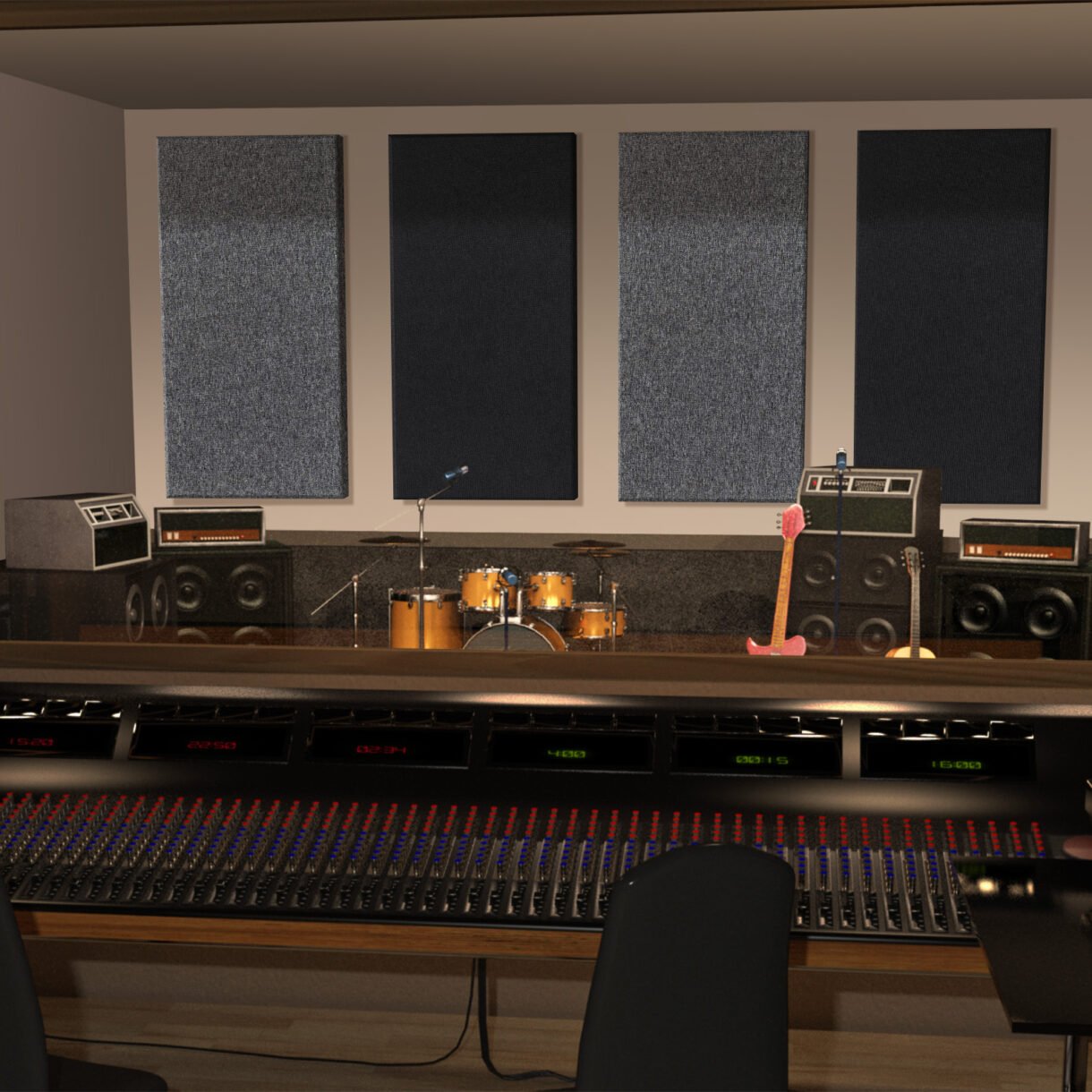
Studios need control over short reflections that enter microphones and reduce recording clarity. Fabric-wrapped panels are commonly placed behind speakers, beside the recording position and on the rear wall.
They can also be built as movable absorbers. A movable panel gives the user more control when recording different instruments, vocals or group discussions.
For low-frequency problems, thicker absorbers, corner treatment or an air cavity may be needed. Thin panels fixed directly to a wall are more effective for mid- and high-frequency reflections than for deep bass.
Offices and Meeting Rooms
Meeting rooms often contain glass partitions, hard tables and smooth ceilings. These surfaces reflect voices, making online meetings and face-to-face conversations harder to understand.
Custom fabric-wrapped acoustic panels can be matched to the interior color scheme and installed behind display screens, along side walls or on the ceiling. In open offices, ceiling absorbers and wall panels can help reduce the spread of conversation noise, although layout, partitions and background sound also need to be considered.
Schools and Training Rooms
Classrooms need clear speech. When reverberation is too long, students hear the teacher’s voice mixed with delayed reflections from the walls and ceiling.
Wall and ceiling acoustic panels can reduce these reflections without occupying floor space. In areas where students may touch the panels, the fabric should be durable, the edges should be enclosed, and the fixing system should prevent the panel from being pulled away from the wall.
Restaurants, Hotels and Commercial Interiors
Restaurants often become uncomfortable when conversations, tableware and background music reflect from hard surfaces. Acoustic treatment can be placed on selected walls or above dining areas without changing the room layout.
Hotels may use fabric acoustic panels in conference rooms, corridors, function rooms, reception spaces and private entertainment areas. The fabric finish allows the acoustic treatment to follow the interior design rather than compete with it.
Other applications include:
- Home cinemas
- Auditoriums
- Libraries
- Broadcasting rooms
- Call centers
- Churches and worship spaces
- Multipurpose halls
- Exhibition rooms
- Healthcare consultation rooms
Installation Methods for Fabric-Wrapped Fiberglass Acoustic Panels
Direct bonding is one of the most common installation methods for lightweight fabric-wrapped fiberglass acoustic panels.
High-bond double-sided tape provides initial positioning. Construction adhesive provides the main long-term bond after curing. The tape should not be treated as the only permanent fixing material unless its manufacturer has approved it for the panel weight, substrate and application.
Before installation, check that the wall is flat, dry and stable. Dust, loose paint, oil and moisture can weaken the bond.
A typical installation process is:
- Measure the wall and mark the panel layout with a laser level or reference lines.
- Place the panels on the floor to confirm color direction and arrangement.
- Clean the installation surface.
- Apply high-bond double-sided tape to the back of the panel, keeping it away from visible edges.
- Apply compatible construction adhesive in controlled dots or lines between the tape strips.
- Remove the tape liner when the panel is ready to be positioned.
- Align the panel with the reference line and press it evenly against the wall.
- Check the joints before installing the next panel.
- Allow the adhesive to cure according to its technical instructions.
The adhesive should be tested on a spare panel and a small part of the actual wall. This confirms that it bonds correctly and does not stain the fabric, affect the fiberglass core or react with the wall coating.
Applying too much adhesive does not necessarily make the installation safer. Excess adhesive may push the panel away from the wall, spread toward the edges or make future removal difficult.
Removable Installation with Hooks or Clips
Not every panel should be permanently glued to the wall.
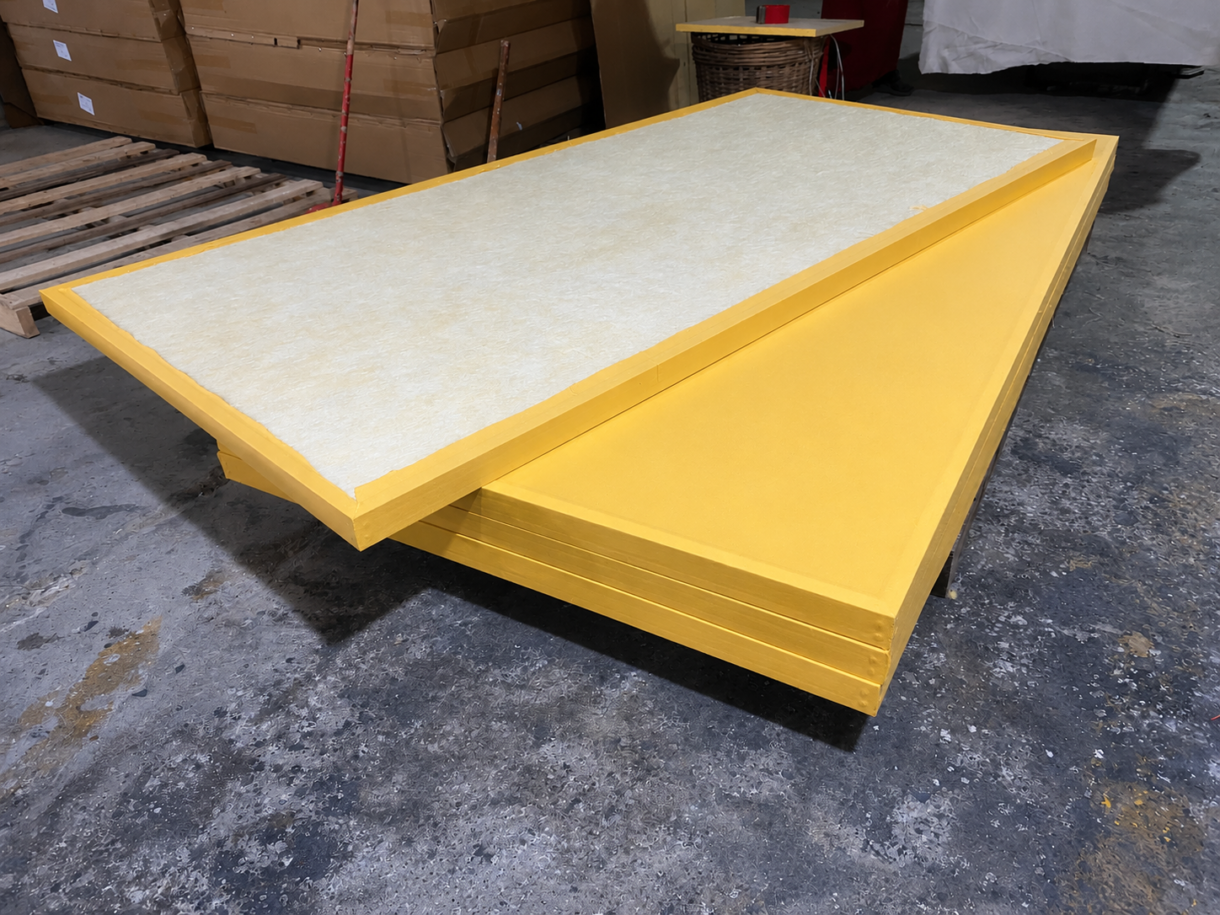
Hooks, clips, brackets or concealed mounting hardware are useful when panels need to be removed for cleaning, replacement or access to building services. This method is also suitable for decorative acoustic artwork and panels that may be moved to another room.
The mounting hardware must be secured to the panel backing or frame, not only to the fabric. The wall fixing should match the substrate. A screw and plug selected for concrete may not be suitable for hollow plasterboard.
Removable systems make panel alignment easier to correct, but the brackets must be installed at consistent heights.
Ceiling Installation and Suspended Sound Absorbers
Fabric-wrapped fiberglass panels can be installed as ceiling-mounted absorbers, acoustic clouds or vertical baffles.
Direct adhesive installation may be suitable for certain lightweight panels if the adhesive supplier, panel manufacturer, ceiling substrate and local regulations allow it. Ceiling installation carries a greater safety risk than wall installation, so adhesive alone should not be assumed to be adequate.
Large panels, thick panels and installations above occupied areas may require:
- Mechanical clips
- Screws with suitable retaining washers
- Concealed frames
- Safety cables
- Suspension wires
- Ceiling tracks
- Custom metal brackets
A suspended panel has exposed surfaces around it and may absorb sound from more than one side. Leaving an air gap between the absorber and structural ceiling can also improve performance at lower frequencies.
The suspension height and spacing should be confirmed before production. Lighting, sprinklers, air-conditioning outlets and access openings must remain functional.
Using Panels as Independent Sound Absorbers
An independent sound absorber is useful when the building surface cannot be permanently modified or when the acoustic layout needs to change.
The panel may be made as:
- A movable floor-standing screen
- A framed wall absorber
- A ceiling cloud
- A vertical suspended baffle
- A double-sided room divider
- An acoustic artwork panel
Independent absorbers are often used in music rooms, recording spaces, rented offices and multipurpose rooms. They can be repositioned as the room function changes.
For double-sided products, the frame, backing and fabric edges should be finished on all visible sides. Floor-standing panels also need a stable base that will not tip during use.
Panel Thickness and Mounting Position
There is no single panel thickness that suits every project.
Thinner panels can help control speech-frequency reflections and improve clarity in meeting rooms or offices. Thicker panels usually provide broader sound absorption, especially when installed with an air gap.
Performance is affected by:
- Fiberglass density
- Panel thickness
- Fabric permeability
- Panel dimensions
- Distance from the wall or ceiling
- Total installed area
- Room volume
- Existing interior materials
- Frequency of the noise
When comparing products, buyers should request a sound-absorption test report showing performance by frequency. A single NRC value is useful for comparison, but it does not describe how the panel behaves at every frequency.
Fire Performance Must Cover the Finished Panel
Fiberglass cores can offer strong fire performance, but the complete fabric-wrapped panel includes fabric, adhesive, backing materials and sometimes a frame.
A fire report for the core alone should not automatically be treated as a report for the finished assembly. The required test method should be confirmed against the building code and project specification in the destination market.
For schools, hotels, hospitals, transportation buildings and other public projects, buyers should confirm:
- Which component was tested
- Test standard and classification
- Panel thickness and density
- Fabric used in the tested sample
- Backing and adhesive included in the test
- Whether the supplied product matches the tested construction
Common Installation Problems
Several problems appear repeatedly on site.
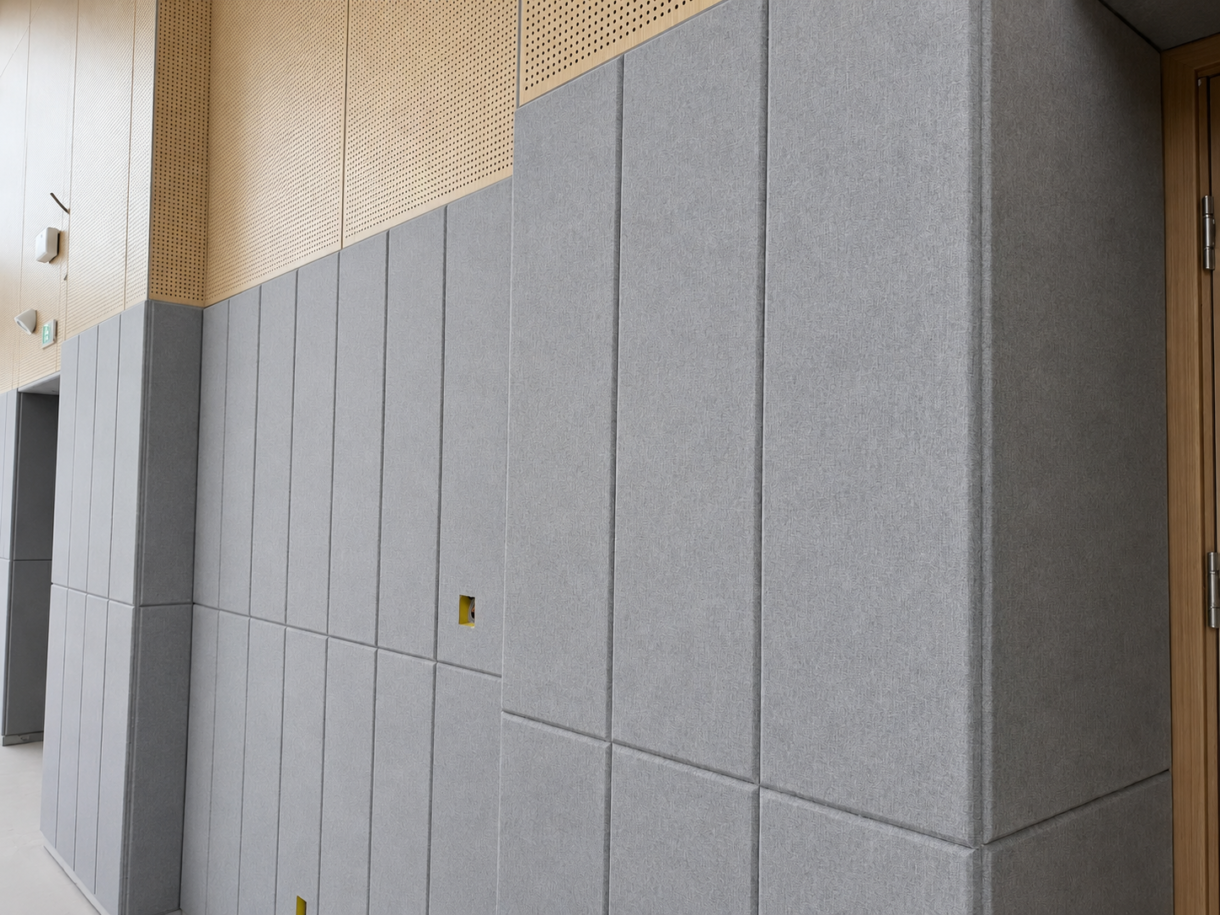
Uneven joints usually begin with inaccurate reference lines or panels that are not square. Visible glue marks often result from applying adhesive too close to the edge. Loose corners may indicate insufficient surface preparation or an unsuitable adhesive.
Color direction is another detail that can be missed. Some fabrics look different when rotated because light falls across the weave in another direction. Marking the back of each panel before installation can keep the fabric orientation consistent.
Panels should also be stored flat, protected from moisture and kept away from dust before installation. Installing damaged or contaminated panels and trying to clean them afterward rarely gives a good result.
Questions Buyers Often Ask
Can fabric-wrapped fiberglass acoustic panels be touched?
Yes, they can be installed within reach when the fiberglass core and edges are properly enclosed by a suitable fabric and backing system. The project should still confirm surface durability, cleaning requirements and applicable health or safety documentation.
Can the panels block noise from the next room?
Their main purpose is to absorb reflections inside a room. Reducing noise transmission between rooms normally requires a sealed sound-insulation wall or ceiling system.
Can they be installed directly on concrete?
Yes, if the concrete is dry, clean, flat and compatible with the selected adhesive. Painted, dusty or damp concrete requires preparation before bonding.
Are double-sided tape and construction adhesive enough for ceiling installation?
Not in every case. Panel weight, dimensions, substrate, humidity, adhesive rating and local safety requirements must be reviewed. Mechanical restraints or safety cables may be required.
Can the fabric color and panel size be customized?
Yes. Fabric color, panel dimensions, thickness, edge treatment, shape and mounting method can be prepared according to the project design and order quantity.
How should a buyer request a quotation?
Provide the panel dimensions, thickness, quantity, fabric color, installation location, required test standards, destination port and preferred mounting method. Drawings and site photographs help the supplier check details before production.
Project-Based Manufacturing and Customization
XIAO HENG supplies custom fabric-wrapped fiberglass acoustic panels for commercial and architectural projects. Sizes, thicknesses, colors, shapes, fabrics and fixing systems can be prepared for walls, ceilings and independent sound absorbers.
Before quotation, we review the application area, installation surface, panel layout and performance requirements. This helps avoid supplying a standard panel that does not fit the actual site.
View our fiberglass acoustic panels or contact us with your dimensions, drawings and project requirements.